Shopping With Intention: What Quiet Luxury Gets Right (And What Most People Miss)
Let's be real about something. The "quiet luxury" trend that's been dominating fashion conversations for the past couple of years has a bit of an image problem. The version you see on social media tends to look like a lot of beige cashmere, old-money aesthetics, and price points that most of us aren't working with. And that framing misses the entire point.
Because quiet luxury, at its core, isn't a price bracket. It's a mindset. It's the difference between buying something because you were in the mood and buying something because you actually thought it through. Between a cart full of things that felt exciting at checkout and a wardrobe full of things you genuinely love wearing.
That mindset? Completely available to everyone.
The Problem With Aspirational Shopping
Aspirational shopping isn't inherently bad. There's nothing wrong with buying something that represents the life you're building, the version of yourself you're growing into, or just a little bit of joy on a Tuesday. Fashion is supposed to be fun.
But aspirational shopping becomes a problem when it's the default mode — when you're buying for the fantasy version of your life instead of the actual one. The beautiful silk blouse you'll "definitely wear to something" that still has the tags on it eight months later. The structured bag that looks incredible on Instagram but doesn't fit your actual daily carry. The going-out dress for going-out occasions that happen twice a year, if that.
That's not intentional shopping. That's expensive wishful thinking.
What Purposeful Curation Actually Looks Like
Intentional purchasing isn't about being boring or restrictive. It's about asking better questions before you buy — and being honest with the answers.
Here's the framework we'd suggest:
1. The Life Test Does this fit your actual life, or the life you imagine having? There's a difference between buying something slightly aspirational that nudges you in a direction you're genuinely moving toward, and buying something that belongs to a completely different version of your daily existence. Be honest about which category this falls into.
2. The Three-Wear Check Can you think of three specific occasions — not vague, theoretical ones — where you'd wear this in the next three months? Not "I could wear this to..." but "I will wear this to..." If you can name three, it's probably a good fit. If you're struggling to get to one, that's information.
3. The Cost-Per-Wear Math This one's practical. A $200 dress you wear 40 times costs $5 per wear. A $60 dress you wear twice costs $30 per wear. Price and value are not the same thing. The more intentional your purchases, the better your cost-per-wear math tends to get — because you're buying things that genuinely integrate into your life.
4. The Waiting Game For anything over a certain amount — pick your own threshold, maybe it's $75, maybe it's $150 — wait 24 to 48 hours before buying. Not to talk yourself out of it, but to let the initial excitement settle. If you're still thinking about it two days later, that's a much stronger signal than the dopamine hit of first seeing it.
5. The Return Audit Look at your return history for the past year. What patterns do you see? Most people find that they return the same types of things repeatedly — a specific fit they keep hoping will work, a color they're drawn to but never actually wear, a category of item they keep buying and never using. That audit is honest, humbling, and genuinely useful.
Why Fewer Regrets Actually Feels Like Luxury
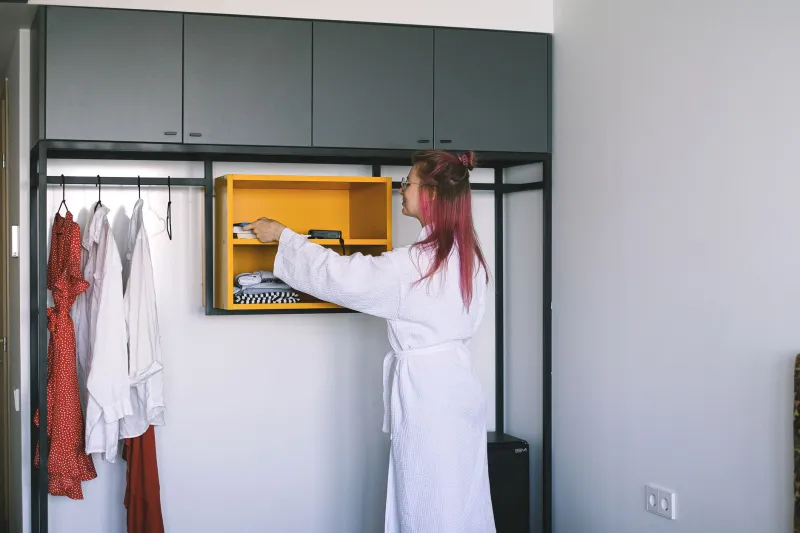
Here's the thing nobody really talks about when they talk about quiet luxury: the actual luxury isn't the cashmere or the leather goods. It's the feeling of opening your closet and knowing that everything in it was chosen on purpose. That there's no guilt attached to the items hanging there, no "I don't know why I bought that" clutter, no pieces that make you feel vaguely bad every time you see them.
That feeling — that sense of curation and intention — is available at any price point. It's built through decisions, not dollars.
When you shop with intention, you end up with a wardrobe that feels coherent. Things work together because they were chosen to. You have fewer pieces but more outfits, because everything you own plays well with everything else. Getting dressed becomes easier, faster, and honestly more enjoyable.
The Regret Equation
Shopping regret almost always comes from one of two sources: buying something impulsively without thinking it through, or buying something that was right for someone else's life but not yours.
Intentional shopping doesn't eliminate regret entirely — sometimes you make a thoughtful purchase that still doesn't work out. But it dramatically reduces the frequency. And more importantly, it shifts the nature of the regrets you do have. A deliberate choice that didn't pan out feels different than an impulsive one. You learn something from it rather than just feeling bad about it.
A Note on Budget
None of this requires spending more money. In fact, intentional shopping usually means spending less — fewer purchases, higher satisfaction, lower return rates. The goal isn't to upgrade your price points. It's to upgrade your decision-making process.
A $35 top that you wear constantly and love every time is a more intentional purchase than a $350 top that sits in your closet making you feel guilty. Quiet luxury isn't about what the tag says. It's about whether the piece earns its place.
Shop like you mean it. Your wardrobe — and your bank account — will thank you.