Dress in Color, Change Your Whole Mood: What Your Closet Can Do for Your Confidence
You've probably had one of those mornings. You throw on something bright — a cobalt blue blouse, a terracotta wrap dress, maybe a pair of cherry red sneakers — and suddenly you feel a little more ready to take on the day. That's not a coincidence. That's dopamine dressing, and it's been quietly influencing the way people get dressed for years.
The idea is pretty simple: intentional color choices can genuinely shift how you feel. Not in a pseudoscience, crystal-energy kind of way — in a very real, psychologically documented way. And once you start thinking about color as a tool rather than just a preference, shopping gets a whole lot more purposeful.
Why Color Actually Affects Your Brain
Color psychology has been studied for decades across fields like marketing, interior design, and behavioral science. When it comes to fashion, the effects are twofold. First, the colors you wear influence how other people perceive you. Second — and this is the part that often gets overlooked — they affect how you perceive yourself.
Research in the field of "enclothed cognition" (yes, that's a real term) suggests that what we wear shapes our mental state. When you consciously choose a color that feels powerful or joyful to you, your brain responds to that choice. You carry yourself differently. You make eye contact more. You speak up in the meeting.
That's not magic. That's just your nervous system responding to a cue you gave it when you got dressed.
The Color Breakdown: What Different Hues Actually Do
Not all colors hit the same way, and understanding the general emotional associations can help you shop smarter — not just for what looks good, but for what works for the life you're actually living.
Yellow and warm oranges are energizing. They're associated with optimism and creativity, which is why they tend to feel great on days when you need a boost or want to feel more approachable. A mustard yellow cardigan or a burnt orange tote can do more for a slow Tuesday than a second cup of coffee.
Red is the confidence color. It signals presence. Studies have shown that people wearing red are perceived as more assertive and even more attractive. It's a strong choice for job interviews, first dates, or any situation where you want to feel like you walked into the room with intention.
Blue — especially deeper shades like navy, cobalt, or royal — tends to calm the nervous system while also projecting trustworthiness. It's no accident that it's the most popular color in American work wardrobes. If you're heading into a high-stakes presentation or a tough conversation, blue is quietly doing a lot of heavy lifting.
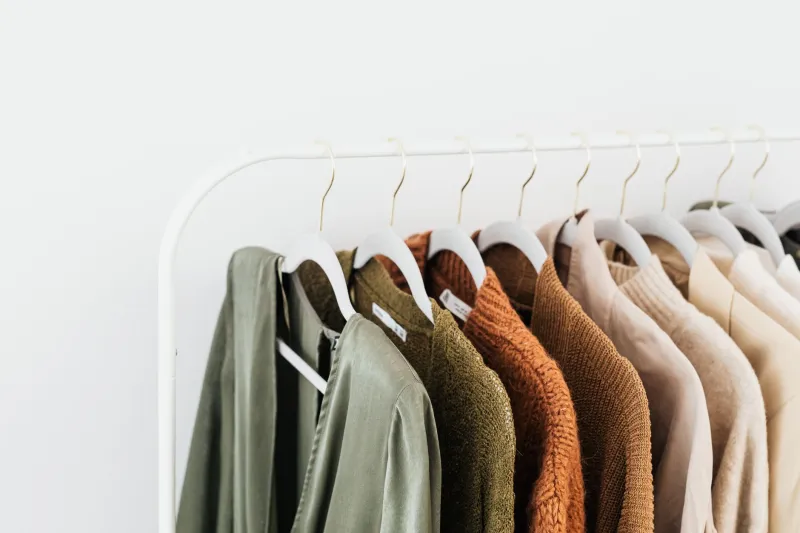
Green, particularly earthy tones like sage, olive, and forest green, grounds you. There's a reason so many wellness brands use it — it visually communicates calm and balance. Wearing green can help you feel centered on days that feel scattered.
Pink has had a serious cultural moment, and for good reason. Soft pinks feel nurturing and open, while hot pinks feel playful and bold. Either way, pink tends to invite connection — it signals warmth and approachability in a way that few other colors do.
Neutrals (cream, camel, warm white, chocolate brown) aren't just safe defaults. When worn intentionally, they communicate ease and sophistication. They're the wardrobe equivalent of a deep breath.
Skin Tone Matters — Here's How to Think About It
Here's where it gets personal. Color psychology is universal in some ways, but the specific shades that will make you glow versus wash you out depend on your undertones.
If you have warm undertones (golden, peachy, or olive skin), you'll generally look most radiant in earthy warms — terracotta, warm reds, golden yellows, camel, and warm greens like olive. Cool, icy tones can sometimes make warm skin look a little flat.
If you have cool undertones (pink, red, or bluish hues in your skin), you'll typically shine in jewel tones — emerald, sapphire, amethyst — and crisp, cool neutrals like white, charcoal, and true navy. Overly warm or orangey tones might clash with your natural coloring.
Neutral undertones are the lucky ones — you can genuinely pull off a wider range of colors and have more flexibility to lean into mood-based dressing without worrying as much about contrast.
Not sure what your undertones are? Look at the veins on your inner wrist. Greenish veins typically signal warm undertones; bluish or purplish veins suggest cool. A mix of both? You're likely neutral.
Shopping with Color Intention
This is where curation comes in — and why we think about it as more than just pulling together pretty things.
When you're shopping, it helps to have a loose framework for what you actually need your wardrobe to do emotionally. Think about the situations that drain you. The ones that energize you. The roles you play — at work, with your family, with your friends — and how you want to feel in each of them.
A few questions worth asking before you add something to your cart:
- Does this color make me feel anything when I put it on? Not just "does it look good" but does it shift your energy at all?
- What's missing from my color rotation? If your closet is 90% black and grey, you might be dressing for invisibility without realizing it.
- Am I buying this color for me or for someone else's expectations? Dressing to feel something is very different from dressing to disappear.
Building a wardrobe that works emotionally doesn't mean you need to show up to every Monday in a neon jumpsuit. It means being thoughtful about the palette you're working with — and making sure it actually reflects the version of yourself you're trying to show up as.
The Bigger Picture
At Shop Ava, we believe that curation is personal. It's not just about finding things that are beautiful or on-trend — it's about finding things that do something for you. Color is one of the most immediate, accessible ways to make your wardrobe work harder for your emotional life, and it doesn't require a complete overhaul.
Start small. Add one piece in a color that genuinely excites you. Pay attention to how you feel when you wear it. Notice if people respond to you differently. Give yourself permission to dress for your mood instead of just your schedule.
Because honestly? Life is too short to wear colors that don't make you feel something.